All posts by Donna Green-Townsend

Interview Transcript for Steve Leitman

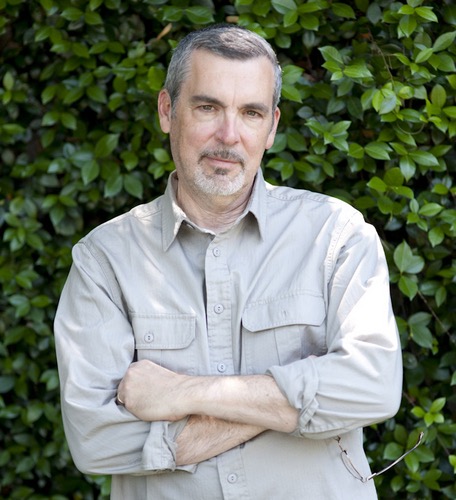
Steve Leitman, Environmental Scientist, NW FL Water Management District (talking with Joshua Azriel)

Azriel – How many years have you worked for them?
Leitman – I ve worked for the district for the last six years, but I ve worked on this issue for the last 24 years including for about four or five years when I worked with Florida Defenders of the environment as the Apalachicola river coordinator.

Azriel – Okay, and tell me a little bit about what the Florida Defenders of the Environment does.

Leitman – FDOE is a non-profit environmental group based out of Gainesville and was originally an organization that was a group of University of Florida professors opposing the construction of the cross-Florida barge canal, so it was an interdisciplinary group which really focused on bringing technical information and challenging technical information in decisions by the government.

Azriel – Well first, what are your thoughts about the agreement between the three states regarding the Appalchicola, the Chattahootche and Flint rivers?
Leitman – Okay there are several things we need to think about regarding this agreement. First, its fairly monumental in several ways, first of all this is the first river basin commission created in the southeast portion in the United States and the first since passage of the clean water act in the 70 s and so this was created in a completed different context than other river basins such as the Potomac, or the Delaware river which currently exists on some of the planning commissions. Another important thing to realize with this larger agreement is that in this river basin we are trying g to deal with issues when the ecological integrity of both the Apalachicola river and Apalachicola bay are still intact, so its this trying to deal with things before the fact instead of after the fact, its proactive instead of reactive. And when you take a proactive approach its cheaper, you have more options and probably have better results and so if we look at the problems I think looking at the overall issues is that people should be commended for dealing with this issue so early.
Azriel – What do you think the most important function of the committee that will be organized from it?

Leitman – Well, in the short term the most important function is defining a water allocation formula which when we created the compact legislation, we purposely left out the formal so that it could be defined by the committee and the reason for this is that we have to take more of an adaptive approach and you have to be able to learn and amend such agreements and experience has shown that in agreements when you write it into the agreements, it s a direct ticket to the Supreme Court because their will be errors. A good example of an error is in the Colorado River where they allocated about 140 – 150 percent of the river s flow and naturally the upstream states thought they d get there s and that meant the downstream states didn t get theirs and everyone ended up suing each other and so by setting up to have the commission define the formula and be able to amend the formula instead of writing to the legislation at least you make this concept of adaptive measurement possible. In the long term though the important thing will be whether they ll be able to take this adaptive approach, It s the whole idea of whether they re going to be able to do research monitoring, learn, amend and live with the system or whether they re just going to try and fix something.

Azriel – What was it about the allocation amongst the three states in the first place that needed to have this set up?

Leitman – Well, from a larger perspective first of all, if you look at the Federal laws there s, we have a clean water act which at least sets up standards of how to deal with water quality although sometimes it s not done to the satisfaction. At least there s Federal legislation that allows it, whereas from a quantity aspect you really don t have system wide standards for dealing with quantity of flow and so I would say that s a pretty important aspect of it. And it s important when you look at Apalachicola river, Apalachicola bay that you realize the real drive that makes everything work is flow in terms of the flow plain it s the extent and duration of flow and in terms of the estuary the salinity regime is really the important driving function that defines the whole Eco-system so the salinity rege defined by the Apalachicola river which in turn is the flow of the river.

Azriel – What is the salinity regime?

That’s when I talk about salinity regime or flow regime I m speaking of the concept that over the course of the year the Apalachicola river flow will vary eight to ten fold in a typical year and between, from year to year you ll get variation. And what this results in is a pulsing of salinity, you don t have a constant salinity level in the estuary, but you have a changing salinity , and a lot of the species that live there in fact all of them are adapted t this concept of change both in terms of the elevation of flow or the flood plain being flooded sometimes, being dry sometimes and the estuary of pulsing salinity regimes. In fact if you looked at oysters for example, you ll l find that much of the diseases associated with oysters are marine in origin, which means if you have this pulsing regime you re constantly pushing the marine uh, antagonists away from the system.

Azriel – Interesting. Uh, for the listener who really doesn t know a lot about how rivers are connected, um, how the activities in one state can affect things downstream, what do you think the danger is right now, the potential dangers are right now to the Apalachicola River?

Leitman – Well, the Apalachicola river is roughly a 20-thousand square mile drainage basin and if you look at that basin and divide t state to state you ll see that about 75 percent of that drainage basin lies in Georgia, about 12 and a half or one-eighth lies in Alabama and a similar one-eight lies in Florida, so a flow is sor rivers that lie along Georgia and Alabama, one of them is the flint one of them is the Chattahootche, and these two rivers are very different in nature. The Chattahootchee River is fed mostly by overland flow and the Chattahootchee River is fairly highly regulated up in the upper parts of the basin. We have Lake Lanier which has roughly 75 percent of the storage, two thirds of the storage excuse me in the basin and it impounds 10 percent which means the river is highly regulated up by Atlanta but when you get down toward the lower part you have fewer reservoirs greater drainage area and its not so regulated. So the Flint is an impoundment system with service overflow, I mean the Chattahoochee, the Flint in contrasts flows through a carst area and has a large groundwater inflow from springs and such. And that means the flow during low flow naturally is more constant because it had this ground water influx that was happening and in the Chattahoochee basin we large withdrawals happening from metropolitan Atlanta you have cities of Columbus, you have reservoirs. In the Flint Basin you don’t have the large municipal withdrawals but what you do have is agricultural irrigation which has grown tremendously since the 70s and so and they mostly irrigate from shallow ground water wells and you set up pivot type systems and the result is although its a really robust aquifer that seasonally especially during dry years were dropping down the aquifer and that in turn causes loss of flow into the Flint or from the Flint back to the aquifers in extreme cases. And that consequently both of those could be effecting flow in the river in the flow regime.

Azriel – Isn’t Lake Lanier a man made lake?

Leitman – Yes.

Azriel – Do you know when it was built?

Leitman – It was built in the 50s. There’s roughly 15 reservoirs in the basin and only 4 of them have storage and the storage type of reservoirs, there’s two types, one of them will have storage which means they can hold water and release it on schedule and then a number of them around the city of Columbus which is at the fall line coming from the Piedmont to the coastal plain ah those are power type reservoirs where flow in equals flow out so although they effect locally they’re not altering the flow.

Azriel – How does the Apalachicola River compare with other rivers in Florida.

Leitman – In terms of flow, the Apalachicola is by far the biggest river in Florida. Its average annual flow is three times that of the Suwannee River which is the next biggest in terms of flow so its discharge is really large and if you get into flood stage you can get over a 100,000 cubic feet per second flowing down which translates roughly into15 billion gallons per day and so there’s a lot of water coming down that river.

Azriel – How does it compare with its biological diversity?

Leitman – Uh, the Apalachicola River is a very diverse river. There’s a number of reasons one of them being because its water shed extends far up into Georgia that it gets biotic influences from the Appalachian mountains from the Piedmont and from the coastal plain. And then its location is one that causes a really diverse biological community because its getting biological influences from both the Atlantic and the Gulf coastal plains from peninsular Florida from the Piedmont and from the Appalachians and so you have all these five bio regions throwing influence into this one area and the result is a very diverse ecosystem.

Azriel – What dangers does growth around Apalachicola pose to the rivers and its tributaries and the bay?

Leitman – The danger you would have would be is that the introduction of if you have a lot of places with septic tanks. Septic tanks, the way Florida’s septic tanks law works is first of all they’re not concerned with system effects they’re concerned whether each additional one will drain and its not the issue if we have too many individual ones draining what happens. And being able to trace the effects of each one individually and say which house throws you over the where you start to have the problem is the question and then its also that there are important nursery areas that could lie near the shore. Now one of the things it has going for it is it is a well flushed bay, its not like say neighboring Saint Joe Bay which has slow flushing time because there’s only one inlet and outlet whereas the multiple inlets in the large flow and large amount of water flowing through it there’s a flushing so things do get flushed out of there.

Azriel – Is there a danger that development will grow and grow?

Leitman – Oh absolutely there’s a development, it’s a region that has tended to have a fairly depressed economy. Sea food landings fluctuate from year to year to year and you have people definitely sort of buying out the historical culture and going in and putting in a new culture which is more tourism oriented.

Azriel – Do you know how much of the land is federally or state owned which cannot be developed?

Leitman – There’s uh extensive amount of land has been purchased by the government. If you start first at the estuary and look at the islands there’s a large chunk starting from east to west. Dog island, the nature conservancy owns a large tract of land on Dog Island which is zoned just for conservation and then coming to the next part you have on both ends of St. George island you have a park on the east end on the west end you have little St. George island which used to be part of St. George island they put sykes cut in is state property. And then the next island over, St. Vincent, is a federal reserve. So a majority of the barrier island system is in conservation s lands. Then when you start looking around the bay there’s a lot of land which has been purchased for CARL – Conservation and Recreation Lands – environmentally endangered lands programs years ago and then the NW Florida Water Management District has also been purchasing extensive lands in the Saver Our Rivers program. And so the end result is I think 120, 130 thousand acres of lands either flood plain, barrier island or marsh estuarine lands have been purchased to try and provide buffers from development.

Azriel – Tell me about some of the marine life besides the oysters.

Leitman – Well in the estuary you have three types of shrimp and its also a very important nursery grounds for the Gulf of Mexico so when you look at value of these estuaries sometimes we get misled because if we look at just county landings but if its nursery grounds there’s a lot of species that this is where they grow up but when they’re harvested, caught, it could be out in the Gulf of Mexico and landed wherever and its also important for a blue crab and if you go up the river there’s also sturgeon, the Atlantic sturgeon, and we have special Gulf race of strip bass as well as hybrid bass as well as a number of other species and then there’s the number of clams that are pretty significant.

Azriel – How does the river help in raising the Tupelo honey?

Leitman – Honey is a big product in the Apalachicola basin you know the most noted is the Tupelo and there’s an extensive, its because of the flood plain, Tupelo is a flood plain tree it likes it wet and there’s broad Tupelo forests in the lower part of the river which allows for the harvesting of Tupelo honey, which is one of the better honeys you’ll ever run into. And with the protection of these lands by the state, the state allows the bee keepers to go in there and set their hives and pull in the honey and then leave and so this means of sustainment of this industry.

Azriel – With the land that is controlled by the state and the development and seasonal tourism, what kind of balanced will be struck do you think?

Leitman – Well the amount of land you can actually develop either in Apalachicola or on the island is quite limited really and where the balance would be that’s a hard one to say. You’re going to find they run into the problem with a lot of wet area with a lot of public lands and all. I think you’re going to see land prices getting higher and higher there and I think you’re going to find a balance but one of the things I think you’ll find in this balance I fear is with the increasing land prices, the increasing cost of living that you’re going to have a transition of the culture and so that the original inhabitants are going to get displaced or the original culture.

Azriel – Do you work with the economy of the Apalachicola area?

Leitman – Years ago I used to be more involved with that, but my work presently has been very much tied to this interstate negotiations and dealing with the water and that has been such, there’s only so much you can do and really know about.

Azriel – I understand a lot of the tourists come from Georgia, should residents in Florida be concerned with the development up in Atlanta and how it could affect the waters?

Leitman – I think that you know more than development in Atlanta, I would say development in Georgia…

Azriel – In general

Leitman – is a question that what’s the sum or what’s the cumulative effect of all the actions that are going to be happening up stream and how they are going to reflect the flow regime 10, 20, 30, 40 years from now and it gets down to is are what we going to be able to really pass on our cultural heritage to our children to their children to their children passing it on for generations or are we going to keep eroding away at the flow regime.
Azriel – Where does a danger lie?

Leitman – OK well you’re seeing tremendous growth by metro Atlanta and huge population increases and really no efforts within Atlanta area visible to me of constraining the growth, they are in a lets grow mentality and at the same time you have a lot of other demands you know going down the Chattahoochee River at Columbus you have industrial demands industrial uses and then you have the storage reservoirs and they have let people build around these reservoirs and a good example of what can happen with this is this is at Lake Lanier that has roughly two thirds of the storage capability in the basin but unfortunately it is located in the upper part of the basin so consequently that means if they drain down their storage it takes longer to refill because of the amount of area they can gather rainfall to refill. But the other thing they’ve done is in having people live around it, people who live around reservoirs tend to be wealthy, they tend to have influence and they tend to not like the idea of seeing their reservoir fluctuate 36 feet. They’d like to have a dock, they like to go out in the evening when they go out boating and not have a mud flap but have the water. But consequently although Lanier, Lake Lanier, is set up to be managed to fluctuate 35 feet if it changes 4 feet the people around it are screaming saying you can’t lower it anymore. And so a lot of this management capability that was paid for by tax payer money really has turned around to become lake front capability for the residents of the area and the more you have the city of Atlanta taking demands of water supply both from the lake and from the river itself the less water that’s available from the downstream uses.

Azriel – Going back to the commission and its creation, how many years was this in the works?

Leitman – That depends on you define the start of it.

Azriel – Give me your interpretation of it.

Leitman – My interpretation is this has been going on for 15 years and there were several false starts on the idea of how do we get this grip on system wide management and each false start whether or not it resulted in us getting there, there was information and things we were learning so the next time we got into the game we would be able to do better. This most recent round started in 1989 1990 when the city of Atlanta came forward and said they wanted to reallocate water from Lake Lanier from hydropower which would essentially get released for downstream uses to water supply which would be held for water supply for metro Atlanta drinking water and at the same time while doing this environmental impact statement because it was a federal action required by the corps of engineers they came forward and said they were going to release new reservoir manual, reservoir water control plans which would define how they actually manage the reservoirs instead of how they are supposed to under in their older water control plans. And the end result of this information coming out was a law suit saying that the environmental impact statement was inadequate and we reached this junction then of do you go to court and demand a good environmental impact statement or do you negotiate for what you really need which is how do we manage water needs from a system wide context. From a Florida standpoint I felt we didn’t need a good document I felt what we needed was a grip on how to manage it and so this whole law suit led to a four five year study effort and that was important in the process for several reasons. First of all the parties involved were able to develop joint databases and joint tools so that when we are talking to each other, analyzing each other’s approaches we can understand what each other is doing, it provides a common language. A second part that’s important in this that’s overlooked a lot is that in our society we really do not think from a system context and most people don’t and if expect basins such as the Apalachicola River to be managed in a way that very few people think is presumptuous, what this five year period did was it allowed this development of a mentality or a consciousness in the basin where people could start seeing it more as a whole system. When you go and to meeting that has a broad variety of stake holders and you listen to them talk now and compare it to what he heard 6 years ago, its pretty amazing the development and the way people are starting to see things in a different way, its this education and so this is one of those subtle benefits you get in this process.

Azriel – How is Florida treated in the negotiations?

Leitman – I think that we had the rap on us of “Oh they just want to the protect the environment, the birds and the bees, they’re the radicals down south” if I was to be honest about it and uh I think that the perception of us was they were the moderates and we were these environmental radicals down south. To this day I still don’t see what’s so radical about wanting to pass our heritage down to future generations, to me that’s the conservative approach not the radical approach.

Azriel – How much of what is in the Gulf is impacted by the Apalachicola River?

Leitman – I don’t know how you’d say how much in the Gulf of Mexico. The vast majority of the species in the Gulf of Mexico are what you’d call estuary dependent that doesn’t mean they live there all the time but it could be for example they use the estuaries for nursery grounds and its important they have a place for their young to grow up till they reach an age they can survive out in the open Gulf, or that they’re not preyed upon so by other species so easily and so I think the number I’ve seen is like 95 or 98 percent of the species in the Gulf of Mexico are estuarine dependent meaning they spend some part of their life cycle. Now taking that…

Azriel – Spend part of their life cycle…

Leitman – In an estuary

Azriel – OK

Leitman – such as the Apalachicola, an estuary being an area, a semi closed area where fresh and salt water meet. But to say what percentage in the Gulf of Mexico I don’t know how I’d you a number, any number that you put with that I think is grab of the sky.

Azriel – Let me try this question from a different point of view. What goes into the Gulf of Mexico from the Apalachicola River any more special than any other estuaries?

Leitman – I think that you find because you have a large river that Apalachicola is extremely productivity per unit area basis because its sort of a custom designed estuary. You have the barrier islands which are trapping the nutrients trapping the fresh water to create the salinity regime and provide the protective area and you’ve got this large river coming in and the Mississippi and the Mobile are the only ones of the Alabama river are the only ones larger I can think of off hand going down across the Gulf and so you’ve got this ideal set up for productivity.

Azriel – Are there issues that other Gulf states can learn off this issue?
Leitman – I would think that nationally there’s issues that can be learned from this experience you know not just in the Gulf of Mexico because this idea of approaching management of a river from a system wide context how do you get there, how do you involve it, and this whole post federal environmental acts in this whole era of how do we approach dealing with river basin system management is a difficult question. And how do we involve you involve people to do it appropriately, how do we deal with the technical information with the computer capabilities we have now because even ten years ago that capacity to do, to look at information, to simulate systems, to simulate data and more of a technical based decision was nowhere near where it is today. So how do take all this growing bulk of information being developed at UF, FSU, a lot of other places and use it.
Azriel – What is the one thing you would like to tell the listener that makes the Apalachicola River so special?

Leitman – I think what makes it so special is that its a large productive area that hasn’t been destroyed by man yet and we are trying to keep it that way. And that if people go see the river or go see the bay you know you’ll see a large area that’s not over populated that still has a functioning and intact ecosystem. And its got some really nice wild areas on it.

Interview Transcript for Woody Miley

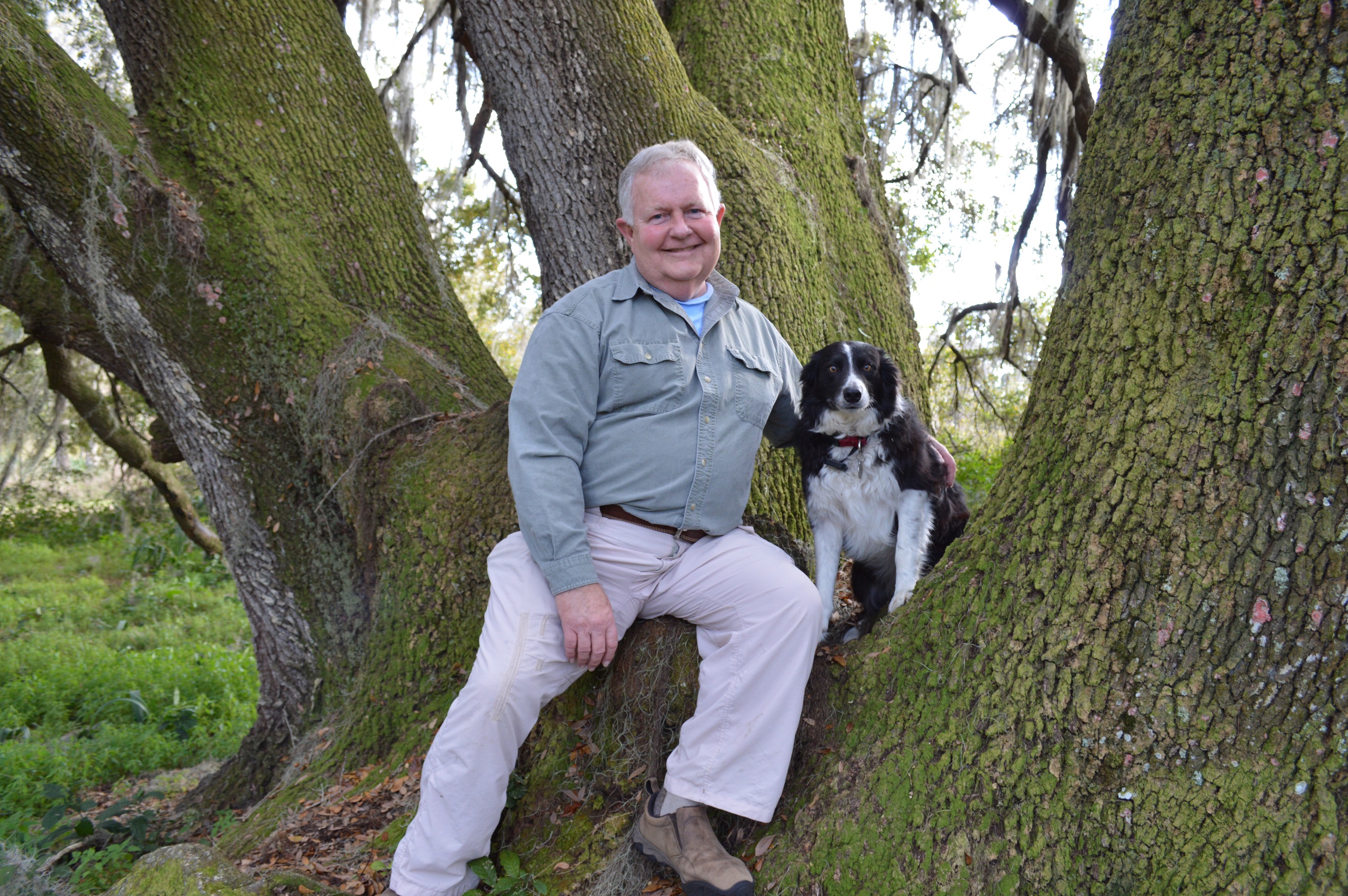
Woody Miley, Director, Apalachicola National Marine Estuary (talking with reporter Joshua Azriel)

I’m with Woody Miley of the Apalachicola National Marine Estuary. Now are you the director? Yes.

How many years have you been the director? 18 years.

Are you from this area? um, not originally. I’ve had this job, um the program was established in 1979 and I was hired as first staff in 1981.

Where are you originally from? I was born in Mississippi. I came here from the University of Florida.

Okay, my first question to you is more of a general question. What makes the Apalachicola River so special compared to other rivers in Florida? The Apalachicola system the river and bay is an absolute miracle system. It is intact, the flood plain is intact, the marsh is intact, it has unimpeded flow as it leaves the Georgia-Florida line; the bay is shallow; the positioning of the barrier islands are perfect for the incorporation of the nutrient laden fresh water coming down the river so the nutrients are incorporated into the estuary food web. So physically and geographically this system is perfect for estuary and riverine productivity.

Take me through how the river is connected to the estuary which is connected to the bay. Well, an estuary by definition is nothing more than when fresh water and salt water meet and mix. But in order to be a productive system you have to include all the other habitats as a functional system. So from a functional standpoint the Apalachicola estuarine system starts about 80 miles north of Atlanta in the foothills of the Blueridge mountains at the head waters the Chattahootchee. Then as it comes down here everything interacts and everything works as a dynamic functional system.

Can you explain to me the range of marine life that one encounters in the Apalachicola? Um, the marine life… An estuary is an exceptionally productive area with high species diversity; with a lot of different critters. However, true estuarine species are fairly rare. The largest component of animals within an estuarine system are marine animals that can stand a little bit of fresh water. The second largest component are fresh water animals that can stand a little bit of salt water, and by far the smallest component as far as number of species, are true estuarine species. There are a few fish here that are a true estuarine species, and oysters are a true estuarine species. Everything else just spends portions of there lifecycles or portions seasonally here.

Well, obviously the Apalachicola is famous for its oysters. What other sea life is there besides oysters that is perhaps unknown? Well, not unknown. um oysters, we claim Apalachicola as the oyster capital of the world and it is certainly justifiable but shrimping here economically, is more important than the oyster industry, although it employs fewer people so its really hard to say who’s king. But our shrimping industry here is very very healthy and very very productive and lucrative. We also have a blue crab industry here and a fen fish industry. Economically, they are dwarfed by the shrimping industry but they are still very important to the local economy.

Talk to me about the range of plant life that one might find in the estuary. In the estuarine system, um …in the Apalachicola drainage we have documented over 13-hundred species of higher plants . 107 of those are listed as federally or state threatened or endangered species, and just a few years ago a new species was identified here; the Apalachicola daisy. In today’s world in a modern country when you can identify a new species that you don’t have to look at under an electron microscope, it tells you something about the pristine natural conditions of the area.

How did you all discover the Apalachicola daisy? Through research done by Florida State University and doctor Lauren Anderson was contracted to do a vascular plant survey in the Apalachicola in the research reserve and he discovered this new species during his studies.

I understand that, and please correct me if I’m wrong but, the tupelo honey is grown along the river itself or some of the estuaries? Along the river into the upper estuaries and all of the tributaries and distributaries of this system, the lower Apalachicola river mostly contained within the Apalachicola research reserve has the largest natural stand of tupelo in the world and is roughly a half million dollar a year industry within state boundaries for bee keepers to maintain and they do a lease with the state and work the tupelo season.

What is it about the ecosystem that makes the tupelo honey so special? Well its the species of tree and the grade of honey that comes from it but the Apalachicola flood plain is perfect for the growth of tupelo trees and it is a major constituent in the plant species along the river and it makes a light very very high quality honey

What kind of trees grow where the honey is produced? In with the tupelo? Yeah. The tupelo is one of the flood plain hardwood you’ll also find Cyprus, bay, there are two species of tupelo in there, the ogeechee tupelo, and the water tupelo, uh a lot of bays some magnolias sable palms both the sable palm and the dwarf sable palm uh, a lot of uh, saw palmetto. The species diversity in the Apalachicola flood plain is very high including tree species.

Is it more diverse than any other system in Florida? Uh, yes it is more than any other in Florida and with some groups of animals it is more impressive than that. For example, we have the highest species density of amphibians and reptiles in all of North America north of Mexico.

Can you give me a rough comparison versus like Louisiana, Mississippi… As far as species diversity…uh. Species diversity here for amphibians and reptiles exceeds that of any place in North America north of Mexico. We are as productive from an estuarine harvest standpoint as anywhere else. In fact, Apalachicola estuary is one of, if not the most productive estuarine systems in the northern hemisphere based on a production per acre basis. We’re even more productive than the Chesapeake although that wasn’t always true.

Now take me through how the Gulf of Mexico as a body is affected by what goes on through the bay and estuaries and river. That’s an excellent question. The bay, the estuary is a nursery ground for offshore gulf of Mexico species. A very important nursery area, spawning area. 42 percent of all seafood harvested in U.S. waters comes from the Gulf of Mexico, that’s more than either the Atlantic or the Pacific. And within the Gulf 95 percent of all species harvested commercially and 85 percent of all species harvested recreationally have to spend a portion of their life cycle in an estuarine system. Blue crabs, for example, migrate as much as 300 miles to spawn in Apalachicola bay. They send their larval and juvenile stages in our marshes and then they scatter out all over the Gulf. So do shrimp and so do fen fish. So the productivity of the Gulf of Mexico is almost totally dependent on coastal productivity, estuarine productivity and Apalachicola is among the best.

Can you give some examples of the different types of marine life that one would find in salt water down here as opposed to fresh water? Uh sure, the fish are the most notable species. You’ve got grouper, snapper, flounder, sharks, amberjack, dolphin, that are all marine species, although some of those, the grouper and snapper, some species of grouper and snapper spend their larval and juvenile stages in the estuarine system. Some are offshore. Freshwater; bass, brim, catfish are all freshwater species and then there are some that do a little bit of both. The anadromous species, the sturgeon and striped bass are two noticeable ones, move in from the open gulf way up the river into the smaller creeks and spawn, or at least they did before the dams were placed on this system and uh, a long time ago Apalachicola had a caviar industry, because the sturgeon was such a plentiful fish but now their spawning grounds are blocked by these dams so not only did we lose a caviar industry we have a highly endangered species with the sturgeon in this system.

How big was the caviar industry here? I don’t remember the numbers of it but is was a commercially viable industry here.

How long ago was it? uh, late 1800’s early 1900’s.

What are the differences in the plant life one would find down the river? Plant life changes rapidly as you come down this river. As you’re coming down through the flood plain it will change with the elevation of the ground and a 6-inch elevation can change the species composition. Then as you get on down the river the less salt tolerant species drop out and the more salt tolerant species are still here, but even the ones that are still here, their growth is retarded by salt influence and uh, the live oak is probably a good example. There are live oaks here that you could almost reach around with both hands that are as old as some of the patriarch oaks in the interior but it’s the same species

The river, fresh water right? Yes. Okay, the river is fresh water then the bay right here. What is that salt? Brackish. Brackish? A mixture. An estuary is where fresh water and salt water meet and mix so a bay is a type of estuary, so the salinity in an estuary and a bay fluctuates depending on how much fresh water is coming down the river or how much salt water is coming in from the Gulf. It also depends on the direction and velocity of the wind because that’s what mixes the fresh water and the salt water. So the salinity in an estuary fluctuates greatly while the salinity in a fresh water system is zero; the salinity in open water gulf is 35 parts per thousand and it can range anywhere in-between in an estuary.

So the water that we see right now, that’s a mixture? That’s correct. Okay then we get out to the Gulf, its salt? Right.

Okay now lets change subject a little bit and talk about some environmental impacts to Apalachicola. One of the things I have learned since undertaking this project is that there’s a lot of pollution going on up in Georgia that a lot of people are concerned about down here especially in the Chattahootchee and Atlanta is a growing city and there’s a lot of dumping going on…. What is the potential environmental harm that can come to the Apalachicola down here in Florida? Because a lot of people might think well, we’re here in Florida, Atlanta’s so far to the north, what would the two have to do with one another? From a water quality standpoint, Atlanta doesn’t have much of an effect on us at this point in time although it is a future consideration for us. The reservoirs that are in Georgia act a sump, the pollution basically stays in the reservoir system and once it gets into Florida our flood plains and our marshes are relatively intact they filter pollution that would otherwise end up in our bay. The potential problem for Apalachicola bay relatively to upstream water usage is water quantity. That’s the discussion that’s going on now between Florida, Georgia and Alabama, the Corps of engineers the tri-state compact the water allocation. So our more immediate problem is losing amounts of fresh water, decreasing the quantity and decreasing the timing of the water. This system has evolved over at least 10-thousand years the way it is now and to change the amount of fresh water coming in or to change the timing, the seasonal changing of the fresh water would have adverse impacts on Apalachicola Bay.

I’m still learning about the tri-state agreement as I go along. As it is right now, how much fresh water under the agreement will be allocated to Florida as opposed to Alabama and Georgia? That is the charge of the tri-state compact. All the user groups have until December 31, 1999 to come up with their version of a fresh water allocation for each of the user groups in the system. These numbers are still being generated by all the user groups and then sometime before the end of this year the negotiations will take place and hopefully there will be some type of equitable allocation of this finite resource.

Were you involved in any of the negotiations? We’re involved here from a technical support standpoint and on advisory subcommittees and generating some of the data that’s used in the negotiations.

Do you work with any environmental agencies in either Alabama and Georgia and if you do what kind of information exchange goes on? Most of that information exchange is done by the compact members themselves, although we certainly have conferences and meetings and discussions and we work with some of the groups in Alabama, but not really the negotiations, that’s done by the compact.

It sounds like you essentially supply the technical information to those who are on the committees of negotiation. Would that be right? Yes, our research staff members here are on committees that uh advise and supply information to the decision makers.

As someone who has worked on this river for now 18 years what is the number one potential threat to the river and estuary and the Gulf? The number one potential threat is changing the fresh water flow into this system. Uh, we have always known that and there hasn’t been a whole lot of data in the scientific literature, but with the demise of the soviet union and our access to their scientific literature and their scientists, they have done years and years of work on the effects of changing the fresh water flow into systems and uh, the Aerial Sea lost a 1.2 billion dollar a year seafood industry. Same horror story for the Azov the Caspian the vast Vulga delta and the number one culprit in their research was changing the fresh water flow into those systems.

And if the fresh water inflow changes then I assume the chain effect would be uh, the fishing industry can go down; is that correct? Yes and that is a major concern but certainly it’s not the only concern, the flood plain plants and animals are a concern for Florida. Here we talk more about the seafood industry but it is not the only concern in fresh water allocation on this system. But it would greatly effect, it certainly has the potential to greatly effect the seafood industry. In particular things like oysters, uh, the fresh water that comes down maintains a salinity gradient within livable parameters. But if we lose fresh water and the bay goes more salty, then all the parasites predators and diseases in the Gulf move in and devastate the oyster bars. With the exception of Blue Crabs, all parasites, predators and diseases of oysters require high salinity. So if we lose that fresh water inflow, the ameliorated effect of the fresh water on the salinity, we have a problem at low flow and we have to have the peak flows, we have to flood the main food source the main energy source of Apalachicola bay is the leaf litter that falls on the river swamp. That’s the gasoline that runs the engine in the bay. So without peak floods we lose the transport mechanism that brings those nutrients to the bay and its called the tridus, that main energy source here is called the tridal food web. So if we don’t flood we lose that main transport mechanism if we lose water at low flow then we lose the salinity balance in the bay.

If I’m to understand this correctly then, the leaves from the trees, when they fall into the bay they act as nutrients for the fish? But they fall on the flood plain floor in the swamp and then the flood waters take them into the river into the bay and then they go through, they’re consumed by bacteria, something bigger eats that, something bigger eats that and standing at the top of this ‘something bigger’ scenario is humans. But the product isn’t going to be there if we don’t pay attention to the functional relationship between upstream and downstream.

Switch to another topic for a few minutes. Talk about the development in Franklin County around the river and the estuaries. Now St. George’s Island in recent years has seen an influx of beach houses and condominiums built there. From what I understand they’re all on septic tanks. Is there an environmental consequence to the bay from all this development in one spot that’s so concentrated? Our biggest water quality threat, is a local threat. However, Franklin county has a very good comprehensive land use plan and we have density restrictions so especially on a relative scale we’re doing great. On St. George’s island septic tanks are no longer legal. You have to use aerobic systems which are much more environmentally friendly and even if you have a septic tank if it fails you can’t replace it, you have to put in an aerobic system. So steps are being taken although from a water quality standpoint, the threat is local.

What is the difference between a septic tank and an aerobic tank? A septic tank is just a holding facility that releases lots of bacteria, lots of nutrients. An aerobic system pumps oxygen into the system, stirs it, actually burns some of it and releases less in the way of pollutants (Okay)considerably less in the way of pollutants.

And therefore if less pollutants are released, the bay is not quite in danger right? Yes, the bay needs some nutrient enrichment. So what happens if you get too much of a good thing then you go into algae blooms, you get no light penetration, you lose your sea grasses and you’ve got so much pollution there that even if the oysters grow they are unfit for human consumption. So its too much of a good thing is what we’re looking at.

Are there other development areas along the Apalachicola river that are under consideration that could pose a threat to the river system? Very little, there’s’ very little industry, very little development right on the Apalachicola. most of the flood plain is intact and a considerable portion of the flood plain is in public ownership.

To the best of your knowledge how much of the land in Franklin County is either state or federally owned? Uh, the land in Franklin county…just a guesstimate, maybe forty percent of the land but now, when we talk about land we’re not necessarily talking high, dry buildable land. Uh, for example a portion of the flood plain that is owned by the state and federal government is annual flood plain that means it floods every year its not a place that should be available for development any3ay and a lot of the other lands that have been bought are marshes. Which, if you looked at how much developable land in Franklin county that percentage would be much much lower.

The land surrounding the river in general, how much of that is under environmental, protection by either the state or the federal government? Uh, there is an active acquisition program going here and within the flood plain …uh within the flood plain at present…uh, there’s at least 100-thousand acres of flood plain that is protected by being public lands. State of Florida owned? Uh, collectively state owned, yes.

How much of the land around the bay and the river has potential to be developed versus that which is automatically protected, you know, by the government? Uh, the numbers I gave you are just a guesstimate on my part. I can certainly come up with those numbers or you might ask…okay…I don’t know those numbers.

All right, to conclude here, is there anything in general you’d like the listener to know about the Apalachicola river system that I didn’t ask you but that you feel is important for them to know? Well, yeah, this is their resource too. This is a regional resource it’s going to take all three states and if we’re gong to manage this system in a way that all the user groups can continue to use it and everyone needs to realize that a fish fillet does not originate at Publix. If they want to eat fresh seafood then we’re going to have to maintain these systems in some type of productive condition or we’re going to lose a major resource.

Apalachicola Doin’ Time Musicians and Songwriters

To learn more about the artists and their music for the Apalachicola Doin’ Time documentary click on the links below:
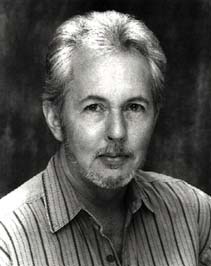
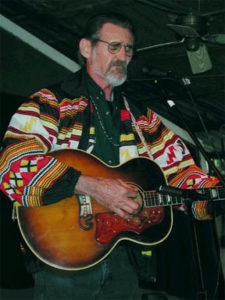
 

This slideshow requires JavaScript.


Dale Crider Bio for Apalachicola Doin’ Time documentary

Jeanie Fitchen Bio for Apalachicola Doin’ Time documentary

Steve Gillette Bio for Apalachicola Doin’ Time documentary

Mike Jurgensen Bio for Apalachicola Doin’ Time documentary

Harvey Reid Bio for Apalachicola Doin’ Time documentary

Ken Skeens Bio for Apalachicola Doin’ Time documentary

Mark Smith Bio for Apalachicola Doin’ Time documentary

Steve Gillette Bio for Apalachicola Doin’ Time documentary

The River

By Steve Gillette

Lyrics:
I’ve seen the paddlewheelers rolling south on a summer’s day
I’ve seen lovers at the guard rails with stars in their lemonade
And I’ve heard the hobos gather, heard the banjos grace the glade
Heard them sing about the river, called it the lazy man’s parade
Sing me that song about the river, green, going away
I always did feel like a drifter about this time of day
Last night I stood by the highway, pretended I was on my way
You know a hundred thousand headlights couldn’t match the milky way
And when the moonlight touches the water surely something touches me
And I go reaching for the river like it’s reaching for the sea.
chorus
Some things go on forever, the truth don’t ever change
The wind may brush the water, but the river holds her sway.
chorus
Compass Rose Music, Used with permission
More information about Steve’s music is available at his website

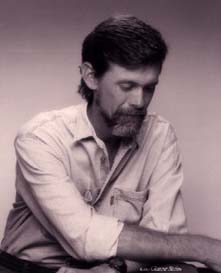
Musician Steve Gillette

Biography:
In a musical age created by the singer-songwriter, Steve Gillette has long been considered to be one of the finest. His music has inspired glowing reviews from the critics and the deep loyalty of his fans. Since Ian and Sylvia first recorded Darcy Farrow in 1966, Steve’s songs have been sung by dozens of major artists including Garth Brooks, John Denver, Nanci Griffith, Waylon Jennings, Gordon Lightfoot, Anne Murray, Tony Rice, Kenny Rogers, Linda Ronstadt, Spanky and Our Gang, Jerry Jeff Walker, Jennifer Warnes, Don Williams, and Tammy Wynette.

Steve’s first album, STEVE GILLETTE, originally released in the Spring of 1968, has recently been reissued by Vanguard on compact disc. The album includes guest performances by Buffy Saint Marie, Bruce Langhorne and Dick Rosmini. His second album, BACK ON THE STREET AGAIN, was produced by John Ware for Outpost Records, with help from Spanky McFarland and Emmy Lou Harris’ Hot Band. Steve’s third album ALONE…DIRECT (solo voice and guitar) was recorded by the direct-to-disc process and produced by John DelGatto on Sierra Records.

Graham Nash produced Steve’s fourth album, A LITTLE WARMTH, which was released on Flying Fish Records in 1979. Appearing on this album were Johnny Barbatta and Pete Sears from The Jefferson Starship, Graham Nash, David Lindley, and Jennifer Warnes.

Since their marriage in April of 1989, Steve Gillette and Cindy Mangsen have been traveling, performing and recording together. Their album LIVE IN CONCERT, recorded at the Ark in Ann Arbor, is available from their own company, Compass Rose Music, and was on many “10 Best” lists when it was released in 1991. A second duet album called THE LIGHT OF THE DAY was named Top Folk Album of 1996 by Rich Warren (WFMT, Chicago) and Matt Watroba (WDET, Detroit).

A collection of twelve of Steve’s original songs was produced in Nashville by Jim Rooney in 1992. The album, called THE WAYS OF THE WORLD (Compass Rose), features studio performances by Stuart Duncan, Mark Howard, Roy Huskey Jr., Kenny Malone, and Mark Schatz. Steve’s latest solo recording is entitled TEXAS AND TENNESSEE (Redwing Music, 1998), with back-up from Charles Cochran, Mark Graham, Mark Schatz, Pete Sutherland, Pete Wasner, Mike Williams and others.

Ken Skeens Bio for Apalachicola Doin’ Time documentary

Old Florida River

By Ken Skeens


Musician Ken Skeens

Biography:
Ken composes music in the tradition of Will McLean, about the preservation and protection of Florida. He’s produced two original CDs, An Empty Chair and Florida Spirit. He was the first winner of the Best Florida Song Contest at the Will McLean Festival in 1992, and served for many years as the director of the contest and a member of the Will McLean Executive Committee. Ken and his songwriting partner Leigh Goldsmith are regular performers in the Orlando area and at festivals throughout the state. They perform songs in harmony in an effort “to keep the spirit of Florida alive”

To learn more about Ken Skeens click here.

Dale Crider Bio for Apalachicola Doin’ Time documentary

Apalachicola Doin’ Time

By Dale Crider

Lyrics:
When she leaves the dam at Chattahoochee 
Winding in a southern flow 
Easy on her way — another night and day 
She’ll finally reach the Gulf of Mexico
Apalachicola River Water 
In veins of our land 
Alligators in her swampy borders 
Are a part of nature’s plan 
Give the word to protect her 
Call the technical sector 
Soften up the cry to drain the swampland dry 
Apalachicola let her wind 
Apalachicola strong in mind 
Apalachicola flowin’ fine–Lord 
Apalachicola doin’ time
So as we turn the page of natural history 
She’s windin’ in a southern flow 
Nursin’ in her waves 
The oysters in the bays 
This is just a part of nature’s role 
(Chorus)
© Dale Crider, Used with permission

Singer Songwriter Dale Crider

Biography:

Dale Crider, a retired wildlife biologist, has been an education specialist for the Florida Game and Water Fish Commission for more than three decades. As both singer and biologist, Dale has spent his life convincing people that Florida wildlife habitats, and the plants and animals dependent on them, should be diligently preserved. Learn more about Dale by clicking here.

Harvey Reid Bio for Apalachicola Doin’ Time documentary

Circles

By Harvey Reid

Lyrics:
I throw a stone into the water and I watch the circles as they grow
While holidays and birthdays leave footprints like soldiers in the snow
The flowers and the icicles are spokes in a wheel that has no end
And the passing of the seasons makes me think about circles again

The sun and the moon, circles tracing circles in the sky
While old people and children look at each other in the mirror in the eye
Like the turning of a waterwheel like the voice of a long lost friend
When I think about my old friends I think about circles again

Round and round and round in circles we spin
Over and over we end up right where we begin
Those things that never change, those things that are never the same
Though it looks like a straight road I’m traveling in circles again

These round coins in my hand there’s so much I do that they ask me
What goes around will come around; there are wheels turning night & day right past me
I had a dream long ago I was hiding but a clock always found me
And now everywhere I look I see circles all around me

1991 by Harvey Reid (Quahog Music BMI) Used with permission.

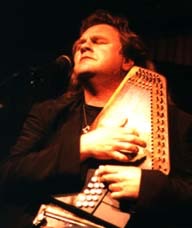
Singer Songwriter and Musician Harvey Reid

Biography:
Songwriter and multi-instrumentalist Harvey Reid has honed his craft since the 1970s in countless clubs, festivals, streetcorners, cafes, schools and concert halls across the nation. He has been called a “giant of the steel strings” and “one of the true treasures of American acoustic music,: and is considered to be one of the modern masters and innovators of the acoustic guitar, autoharp and 6-string banjo. He has absorbed a vast repertoire of American contemporary and roots music and woven it into his own colorful, personal and distinctive style. His 32 recordings on Woodpeckers Records showcase his mastery of many instruments and styles of acoustic music, from hip folk to slashing slide guitar blues to bluegrass, old-time, Celtic, ragtime, and even classical.

Reid is also the author of dozens of music education books as well as an important visionary and pioneer in modern troubadour education. He is the creator of the Liberty Guitar Method, a ground-breaking advance in beginning guitar.
Reid’s skills and versatility on the guitar alone mark him as an important new voice and one of the deepest artists in acoustic music.

He won the 1981 National Fingerpicking Guitar Competition and the 1982 International Autoharp competition. Yet he’s also a veteran musician with a long list of studio and band credits, a strong flatpicker who has won Bill Monroe’s Beanblossom bluegrass guitar contest, a versatile and engaging singer, a powerful lyricist, prolific composer, arranger and songwriter, a solid mandolin, mandocello and bouzouki player, and a seasoned performer and captivating entertainer.

Harvey Reid maintains an extensive website that has the lyrics, liner notes, guitar tunings and more for all of his songs.

Mike Jurgensen Bio for Apalachicola Doin’ Time documentary

Music Drifts Along this River

By Mike Jurgensen

Margaret

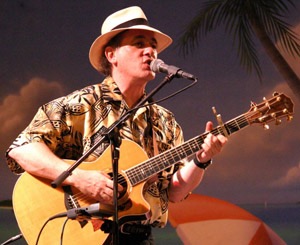
Singer Songwriter Mike Jurgensen

Biography:
Michael Jurgensen has lived in the Tampa Bay area since 1968, when he moved from his native Chapel Hill, NC. Mike began playing the guitar when he was seven years old, but it was not until 1992 that he began performing in public seriously. It was then that he discovered the Iron Horse coffee house in Tarpon Springs, where he began playing open mics. Over the next two years he branched out to do open mics and feature sets at other Tampa Bay area coffee houses and restaurants, as well as regularly emceeing the Iron Horse open mics.

He has also played at several local fairs and festivals, and he has been the featured artist a number of times on various live radio shows on WMNF in Tampa. Although Mike had written several songs prior to 1992, he has only been writing seriously since 1992. Mike was a finalist in the 1994 and 1996 South Florida Folk Festival song-writing competitions, and he won the Best New Florida Song award at the 1998 Will McLean Festival.

In April of 1994 Mike joined the well-known Florida acoustic group, Myriad, which had been together for about 4 years at the time. Together with Myriad, he played concerts at coffee houses, radio shows, benefit concerts, and festivals around the state. The group also has several recordings including two CDs, “Song Circle” and “New Strings.” Mike also has a solo recording project.

In recent years he has performed as part of the trio known as 2PM featuring Mike, Pete Price and Pete Hennings. The trio has performed at a wide variety of Florida festivals and music venues and has three CDs: “Keepin’ Time,” “Let’s Just Play One More,” and their newest project, “Writing on the Wall.”

More information on Mike’s group “2PM” is available at their website. To hear more of Mike’s music click here. Mike can also be reached by mail: 6985 Coronet Dr. / New Port Richey, Fl 34655

Mark Smith Bio for Apalachicola Doin’ Time documentary

Wisdom of the River by Mark Smith


Singer Songwriter Mark Smith

Lyrics:
I have seen a river, and a river has seen me
I have felt its current flowin’ to the sea
In its deep reflection are scenes from yesterday
The wisdom of the river is showin’ us the way
The landscape is the canvas…the water is the brush
Painting out a poem in the stillness and the hush
Then a whisper from a whirlpool takes a shadow for a ride
And the wisdom of the river has found its way inside
When the river talks I…wanna listen, wanna pay attention now, don’t be slow.
When the river talks I…wanna listen, cuz it might say something I wanna know
With skin of fluid motion, that paddle can caress,
It holds me like a lover unafraid to be undressed
With secrets barely hinted, not quite an open book
The wisdom of the river invites a closer look.
(repeat first verse)
Mark Smith, Used with permission

Biography:
Raised on the St. Johns River and in the salt marshes of coastal Northeast Florida, Mark developed a passion for his native Florida at an early age. Always one to find a song in seemingly obscure moments or places, Mark brings the subtleties of Florida’s landscapes and history to life in his original music.
With three albums to his credit, Mark has toured Florida since 1992 performing at numerous established folk venues. He has appeared numerous times at the prestigious Florida Folk Festival in White Springs. He lives in Gainesville.
Mark Smith is accessible via email or regular mail at 2027 NW 56th Terrace / Gainesville, FL 32605.

Jeanie Fitchen Bio for Apalachicola Doin’ Time documentary

Changes in the Wind

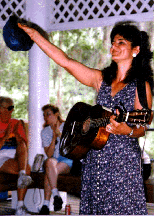
By Jeanie Fitchen

Musician Jeanie Fitchen

Biography:
From the age of thirteen, Jeanie Fitchen has enchanted concert and festival audiences from the Alaskan Arctic to the Carribbean Tropics, bringing to them her singular musical art intertwining original stories and stellar vocals in a rich musical synthesis.

Born and raised in Orlando, Florida, Jeanie grew up with the music of great masters such as Verdi, Puccini and Mozart. Her mother had hoped that she might train for the opera but Jeanie found her musical niche in the simple beauty and artistic style of folk music, viewing it as a vehicle for personal and social expression.

At age 15, Jeanie made her festival debut with appearances at the Florida Folk Festival in White Springs and the Fox Hollow Folk Festival in Petersburg, New York. She continues to be a major performer and MC at numerous festivals and acoustic venues around the country.

She is the recipient of the 2016 Florida Folk Festival Legends and Legacy Award.

In 2010 she was awarded the Fellow Man and Mother Earth Award from the Stetson Kennedy Foundation in recognition of her outstanding song contributions to Florida. The songs she has written and sung praise the defense of Florida’s natural and cultural heritage and have done much to enrich the lives of the living and insure that these treasures will be passed on for generations to come.

In 2001 she she received the Florida Folk Heritage award for outstanding folk artists and culture advocates who have made long-standing contributions to the folk cultural resources of the state. Established in 1985, the program parallels the National Heritage Fellowships.

Jeanie’s concert performances take the listener through the entire gamut of emotions as she spins yarns and tugs at the heartstrings, incorporating traditional as well as contemporary topical elements in her programs. She is a highly-acclaimed songwriter with the ability to evoke through melancholy and euphoria the wondrous resilience and vitality of life.

More information about Jeanie’s music is available at her website